
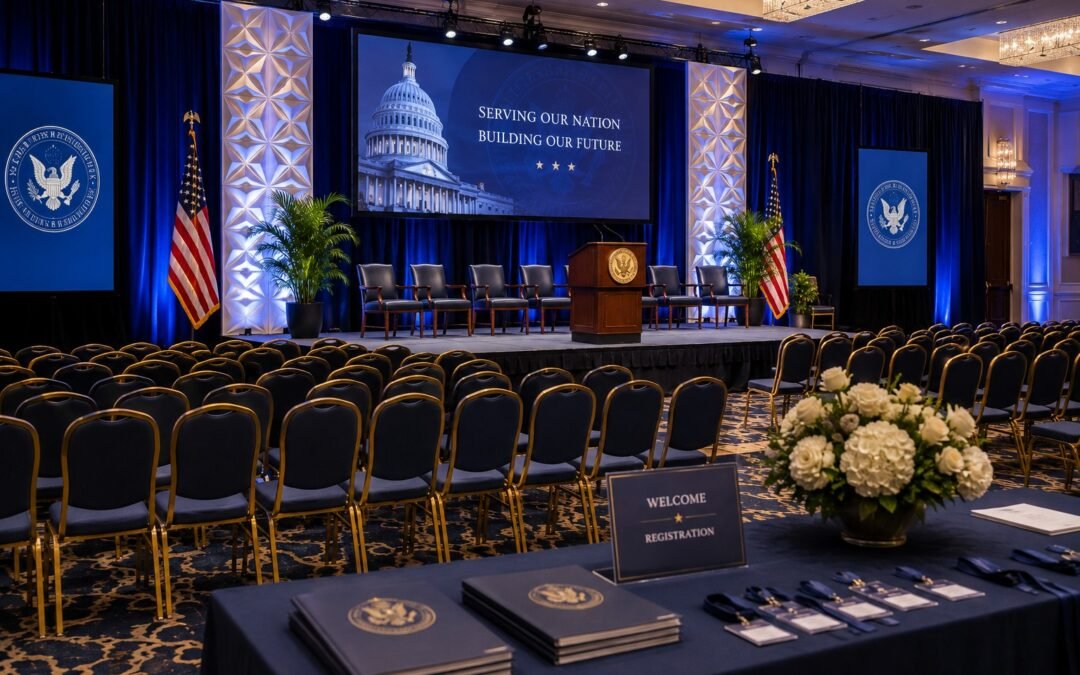
Planning a government event in Washington, DC requires careful coordination, attention to detail, and a strong understanding of event logistics. From official ceremonies and conferences to agency meetings, receptions, award programs, and public-sector gatherings, government events often involve strict schedules, high-profile attendees, security considerations, and professional presentation standards.
Effective government event planning Washington DC requires more than arranging a venue and selecting décor. Every element—from registration and seating to staging, audiovisual production, signage, and guest management—must work together seamlessly.
This guide covers the essential considerations for planning a successful government event in Washington, DC.
Start with Clear Event Objectives
Before making logistical decisions, establish the purpose of the event.
Government events may be organized for:
-
- Conferences and agency meetings
- Official ceremonies
- Policy discussions
- Award presentations
- Public announcements
- Networking receptions
- Training sessions
- Government and nonprofit partnerships
- Executive gatherings
Clearly defined objectives help determine the appropriate venue, layout, production requirements, guest experience, and overall budget.
Choose the Right Washington DC Venue
Venue selection is one of the most important decisions in government event planning. The location should accommodate the expected audience while meeting accessibility, security, technology, and logistical requirements.
Consider:
-
- Guest capacity
- Accessibility
- Parking and transportation
- Loading and unloading access
- Audiovisual capabilities
- Internet connectivity
- Security requirements
- VIP or restricted-access areas
- Seating configuration
The venue should also provide enough flexibility for registration, presentations, networking, catering, and production equipment.
Build a Detailed Event Timeline
Government events often involve multiple stakeholders, vendors, speakers, and approval processes. A detailed timeline keeps everyone aligned.
Start planning important elements well in advance, including:
-
- Venue selection
- Vendor coordination
- Speaker confirmations
- Event design
- Registration
- Catering
- Equipment rentals
- Security coordination
- Production rehearsals
- Final walkthroughs
A well-organized timeline reduces last-minute changes and gives the production team enough time to address potential issues.
Plan Security and Guest Access
Security can be an important consideration for government and high-profile events.
Depending on the nature of the event, organizers may need to coordinate:
-
- Guest credentials
- Restricted-access areas
- VIP entrances
- Registration procedures
- Security checkpoints
- Vendor access
- Delivery schedules
- Emergency procedures
Security requirements should be incorporated into the event layout and timeline from the beginning rather than addressed immediately before the event.
Create a Professional Event Environment
The visual environment should reflect the importance and purpose of the event. Professional event design can transform a standard venue into a polished setting appropriate for government agencies, public-sector organizations, and official gatherings.
Design elements may include:
-
- Custom stage backdrops
- Branded displays
- Podiums
- Directional signage
- Registration counters
- Scenic elements
- Professional lighting
- Decorative installations
Consistent design helps create a cohesive environment while providing guests with clear visual information throughout the venue.
Invest in Professional Event Production
Reliable government event production is essential when presentations, speeches, panels, or official ceremonies are involved.
Production services can include:
-
- Professional sound systems
- Wireless microphones
- Stage lighting
- Projection systems
- LED displays
- Presentation support
- Video playback
- Live streaming
- Technical staff
Before the event begins, conduct a technical rehearsal to test presentations, microphones, lighting, screens, and other production equipment.
A professional production team can also respond quickly to technical issues during the event, minimizing disruptions.
Plan Guest Registration and Wayfinding
Government events can involve large numbers of attendees arriving within a short period. An organized registration area helps create a smooth first impression.
Use clear signage to guide guests toward:
-
- Registration
- Main event areas
- Restrooms
- Networking spaces
- Breakout rooms
- VIP areas
- Emergency exits
Registration counters, branded displays, and professional staff can make the arrival process more efficient while reducing congestion.
Consider Event Rentals and Furniture
Furniture plays both a functional and visual role in government events.
Depending on the format, organizers may require:
-
- Conference tables
- Executive seating
- Banquet chairs
- Cocktail tables
- Lounge furniture
- Podiums
- Bars
- Staging
- Pipe and drape
- Registration counters
Professional event rentals provide flexibility without requiring organizations to purchase and store equipment for occasional events.
Furniture should be selected according to the event format, audience, venue layout, and overall design.
Coordinate Vendors and Logistics
Successful events depend on multiple vendors working together. Poor coordination can lead to delayed deliveries, setup problems, or disruptions during the program.
Important logistics include:
-
- Delivery schedules
- Loading dock access
- Setup timelines
- Vendor credentials
- Equipment placement
- Catering coordination
- Furniture installation
- Production setup
- Event breakdown
Assigning clear responsibilities and maintaining communication between vendors helps keep the event running according to schedule.
Prioritize Accessibility and Guest Experience
Every attendee should be able to navigate and participate comfortably.
Consider accessibility when planning:
-
- Entrances
- Seating arrangements
- Registration counters
- Stage access
- Restrooms
- Signage
- Walkways
- Presentation areas
Beyond accessibility, focus on the overall guest journey. Clear information, comfortable seating, helpful staff, and organized transitions can significantly improve the attendee experience.
Prepare for Event Day
A detailed event-day checklist helps prevent small issues from becoming major problems.
Before guests arrive, confirm:
-
- Venue setup
- Furniture placement
- Stage installation
- AV testing
- Lighting
- Registration
- Signage
- Catering
- Speaker arrival
- Staff assignments
- Security procedures
- Emergency contacts
A final walkthrough with the event team and key vendors provides an opportunity to identify and resolve problems before the program begins.
Work with an Experienced Event Production Partner
Government events require precision, professionalism, and strong coordination. Working with an experienced event production company can simplify the planning process and ensure that every component works together.
At Uniquely DC, we provide event production, custom fabrication, event rentals, scenic design, installation, logistics, and on-site support for organizations throughout Washington, DC, Maryland, and Northern Virginia.
From government ceremonies and conferences to executive gatherings and public-sector events, our team creates professional environments designed around each client’s objectives, venue, audience, and production requirements.
Plan Your Next Government Event with Uniquely DC
A successful government event combines thoughtful planning, professional production, reliable logistics, and a carefully designed guest experience.
By establishing clear objectives, selecting the right venue, coordinating security and vendors, investing in professional production, and preparing thoroughly for event day, organizations can create events that run smoothly and leave a lasting impression.
If you’re planning government event planning Washington DC and need support with event production, custom fabrication, rentals, décor, or logistics, Uniquely DC can help bring every element together from concept through completion.